
RET Face Treatment: How 448 kHz Resistive Electric Transfer Works on Facial Skin
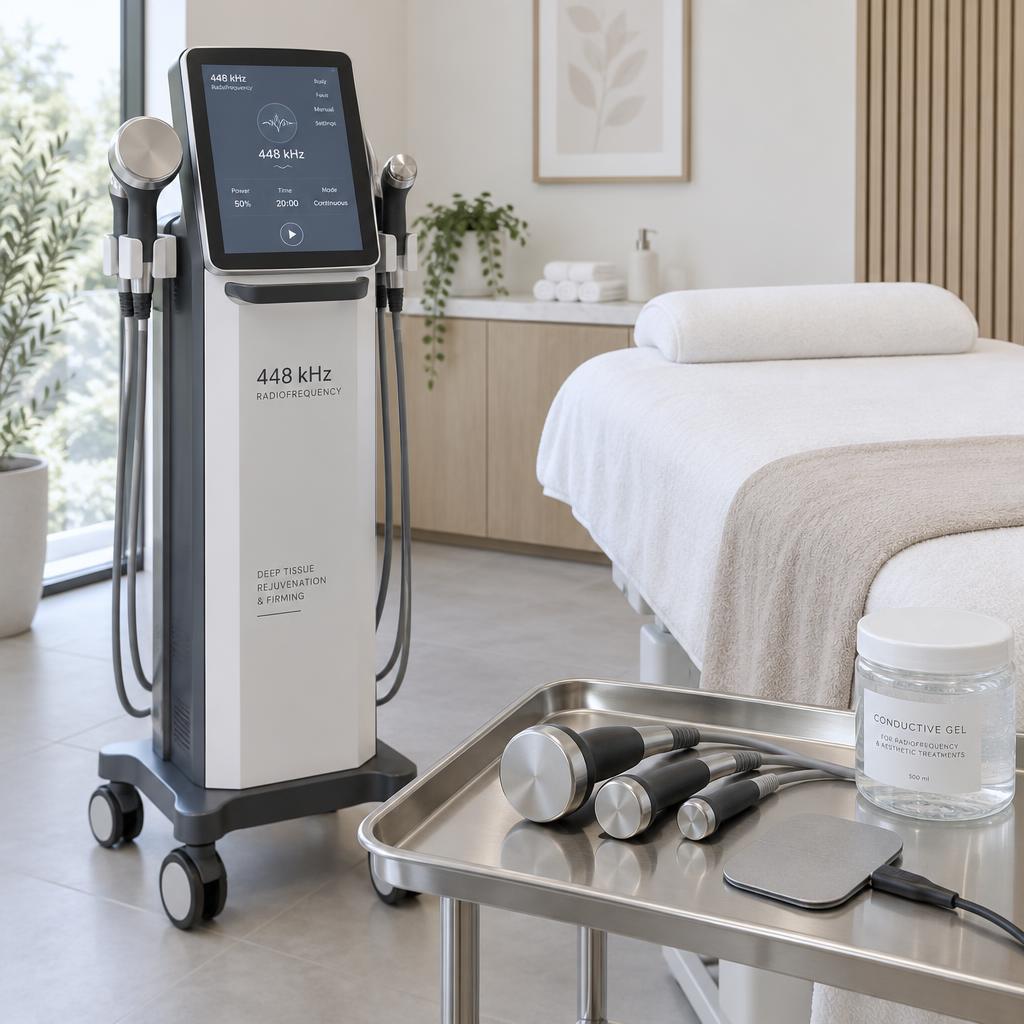
RET face treatment — short for Resistive Electric Transfer — is one of the quieter names in aesthetic technology, yet it sits behind many of the deep-heating facials now offered in clinics and medispas. It belongs to the same family as CET (Capacitive Electric Transfer), and both modes typically run at 448 kHz, a long radiofrequency wave that originated in sports rehabilitation before moving into facial and body work. This article explains what RET actually does to facial tissue, what a session involves, how it compares with other tightening technologies, and how to judge whether it fits your situation.
What RET Means — and How It Differs From CET
Every CET/RET system passes a high-frequency alternating current through tissue between an active electrode and a return plate. The difference between the two modes lies in where the heat is generated.
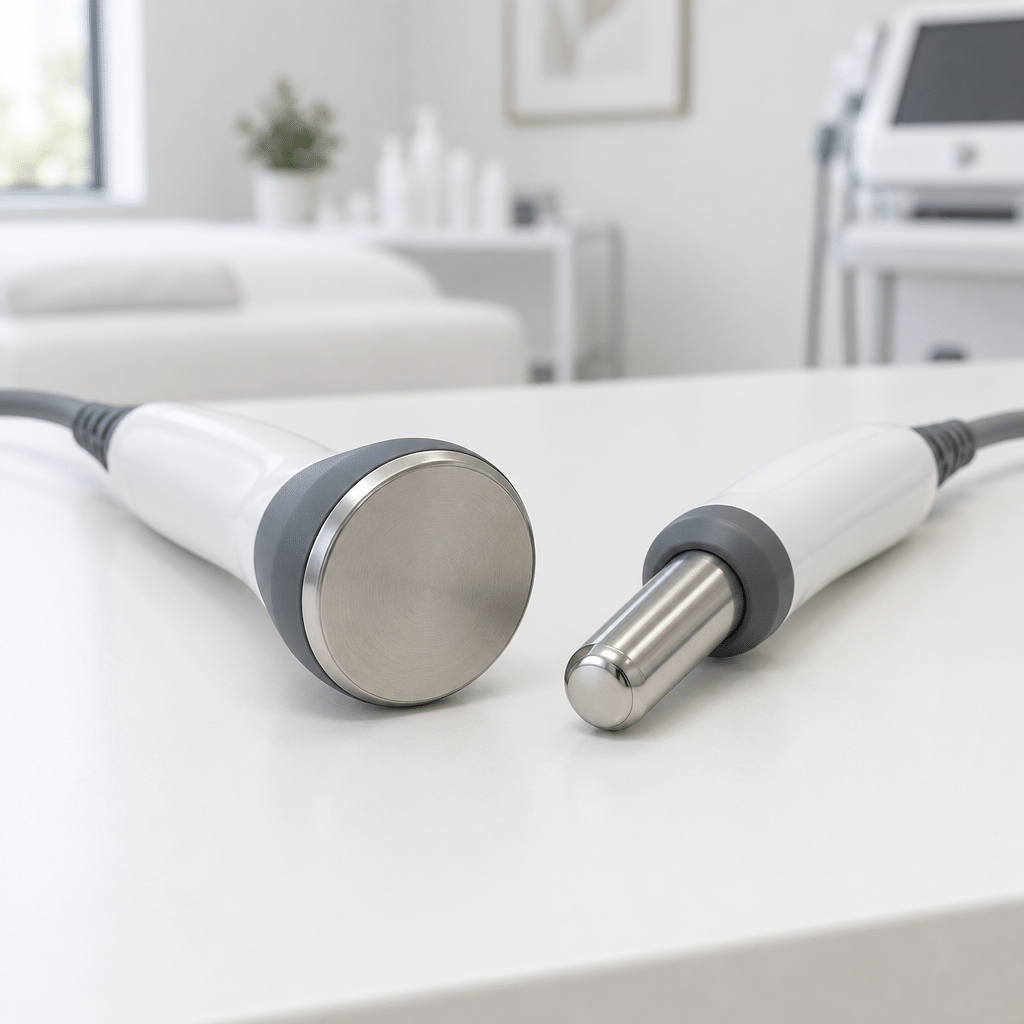
In CET (capacitive) mode, the electrode is insulated and acts like one plate of a capacitor; the current concentrates just beneath the skin, so heating stays near the surface. In RET (resistive) mode, the electrode is a bare conductive element and the tissue itself provides the resistance — heat is produced inside the tissue as the current travels through it toward the return plate. RET therefore warms deeper structures, while CET works closer to the dermis and superficial fascia.
In short: CET heats where the electrode touches; RET heats where the current travels.
That difference drives how the two are used on the face. RET is generally chosen where deeper warmth is the goal — along the jawline, the lower cheeks or the submental area, where superficial treatment tends to feel insufficient. CET suits thinner-skinned or bonier zones, and many practitioners alternate between the two during a single facial. Clinic-grade 448 kHz platforms built for this purpose carry both handpieces in one machine; standing deep-RF heating and skin-tightening units marketed for clinics and spas, such as the 448K RF slimming and skin tightening machine, are the hardware behind this kind of treatment. Specifics like power output vary between models, so the spec sheet is worth reading rather than assuming.
What a Session Involves
Protocols vary between clinics, but the mechanics of a RET facial are broadly consistent:
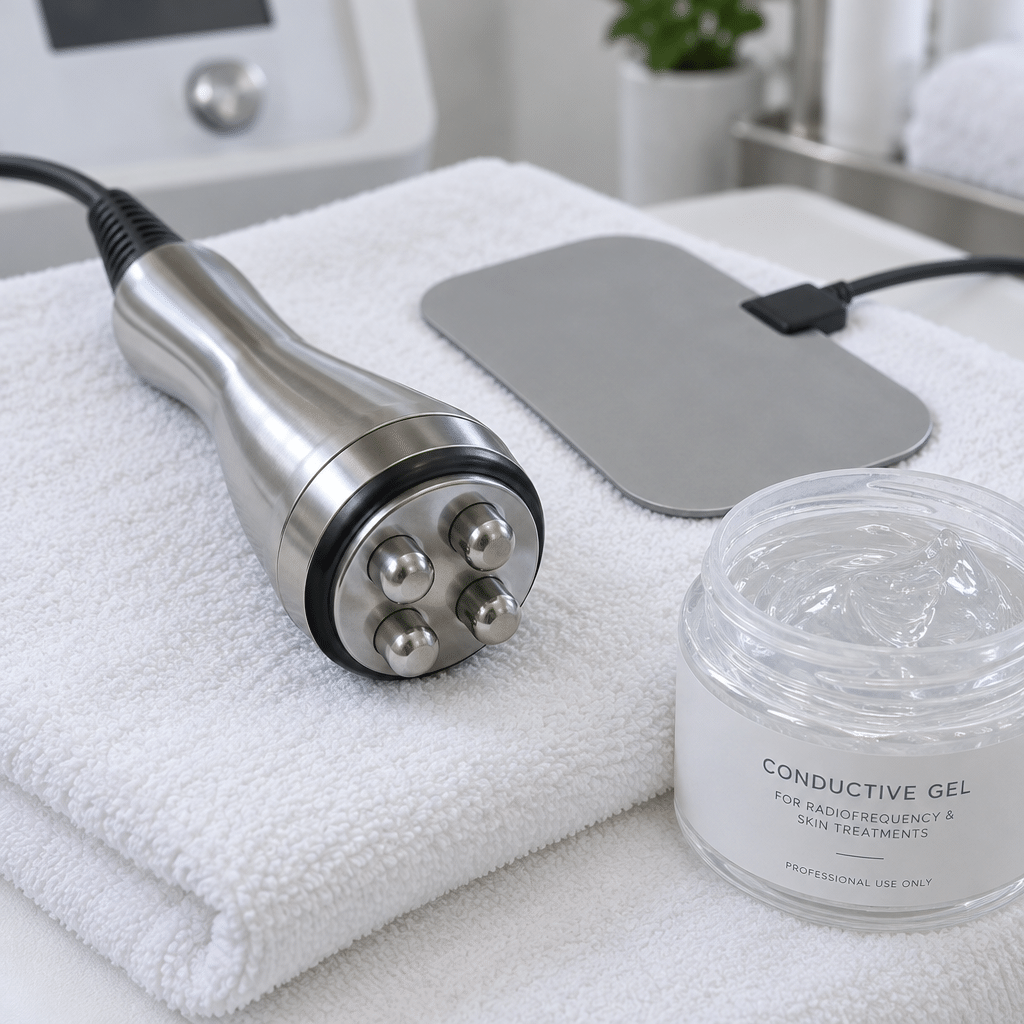
- A conductive cream or gel is applied so the current flows evenly across the skin.
- A neutral return plate is fixed elsewhere on the body to complete the circuit.
- The practitioner moves the handpiece in slow, continuous passes, keeping contact moving so no single spot overheats.
- The sensation is a gradually building, deep warmth — most people describe it as closer to a hot-stone feeling than a sting.
- Mild, transient flushing afterwards is typical; unlike ablative procedures, the treatment involves no recovery period.
Published clinic protocols generally describe a short series of sessions spaced one to two weeks apart, followed by less frequent maintenance. The intended effects are those associated with controlled deep heating: a rise in local tissue temperature that supports circulation, gradual collagen remodeling over the following weeks, and a drainage-like easing of puffiness. These outcomes are reported consistently in practice, but they are incremental — RET is a cumulative treatment, not a single-event transformation, and honest providers will say so.
How RET Compares With Other Tightening Technologies
- Conventional cosmetic RF: most salon-grade radiofrequency devices heat the upper dermis; RET’s resistive mode and 448 kHz platform heritage are designed to reach deeper tissue while staying non-invasive.
- Microneedle RF: delivers energy directly inside the dermis through fine needles — more pinpointed, typically more downtime, and a different risk profile.
- HIFU: focuses ultrasound at specific depths rather than heating along a current path; often chosen for targeted lifting rather than general warming and drainage.
- Microwave + HIFEM contouring platforms: where the goal shifts from skin quality toward contour and muscle tone, some clinics use combined systems — for example a 2.45 GHz microwave and HIFEM contouring machine with interchangeable handles — which pursue a different objective from RET’s tissue warming.
None of these is universally better. They answer different questions — depth, precision, downtime tolerance and the kind of change you want — and comparing them only makes sense once you have defined which of those matters most.
Who It Suits — and Who Should Skip It
RET is most often recommended for mild-to-moderate laxity, a dull or sluggish complexion, and puffiness, particularly in the lower face. Where structural support is genuinely lost, no energy-based treatment substitutes for surgical options, and reputable clinics will say so up front.
The standard contraindication list for radiofrequency applies: pregnancy, pacemakers or other electronic implants, metal implants in the treatment area, and active skin infection or inflammation where the handpiece would pass. Recent injectables in the area are another point to raise before booking. If any of these apply, a RET facial is not the right starting point regardless of how gentle the marketing sounds.
One practical habit worth adopting is recording a baseline before the first session. Clinics that take the work seriously photograph the skin under standardized lighting, or use a multi-spectrum analyzer — the SK-M17 AI skin analyzer, designed for professional skin analysis in salons, spas and clinics, is one example of this category — so that later comparisons mean something instead of relying on memory.
Between sessions, some people support the results with gentle at-home temperature care. A USB-rechargeable hot and cold gua sha massager is built for exactly this — warm mode for circulation, cool mode for puffiness — though its effect is superficial and complements rather than replaces in-clinic radiofrequency.
How to Decide: Practical Criteria
- Confirm the mode, not the name. Ask whether the machine genuinely offers an RET handpiece and what the return-plate setup looks like; some devices marketed as deep RF are CET-only.
- Ask who operates it. Deep heating is technique-dependent; operator training matters as much as the hardware.
- Demand a measurable baseline. If a provider cannot show how progress will be documented, results will remain a matter of opinion.
- Clarify the protocol. How many sessions the plan assumes, how far apart, and what maintenance looks like — the total commitment, not the single-session price, is the real cost.
- Match the modality to the complaint. Texture and redness respond to superficial work; laxity and puffiness are where RET’s deeper heating earns its place.
That is the sensible way to evaluate RET: not as a miracle category, but as one tool among several whose value depends on the depth of the problem, the clarity of the protocol and the skill of the person holding the handpiece. If a provider can answer the five questions above with specifics, you have enough to decide; if not, treat that as a signal to keep looking.